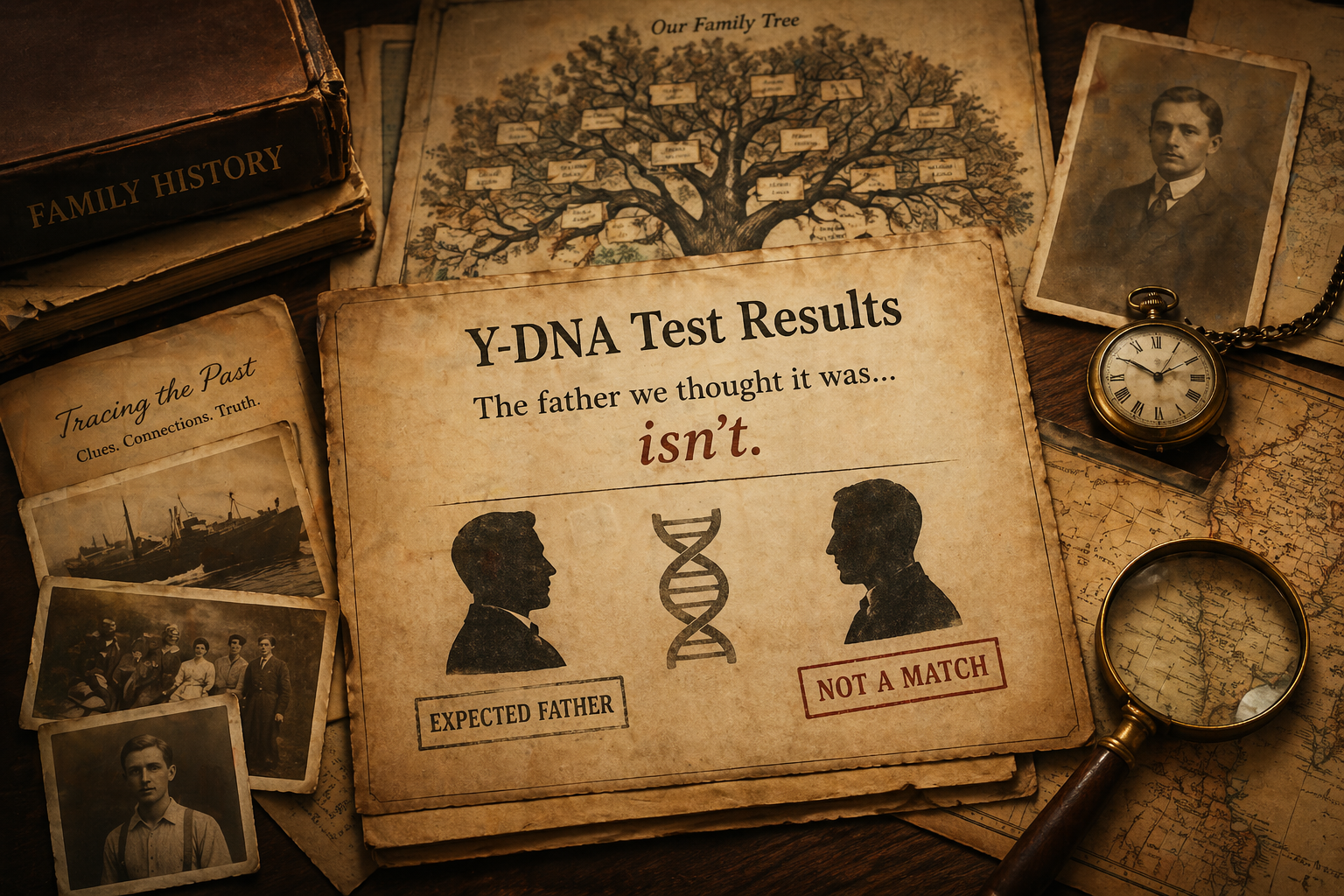
The results of my uncle’s Y-DNA test changed everything. The last name Huggins did not appear at all among the list of male ancestors or genetic matches. The names that did appear repeatedly were Poore, Poor, and Powers.
One name in particular stood out—Poore. It was familiar because I had seen the name before in connection with the Huggins Family.
The First Clue
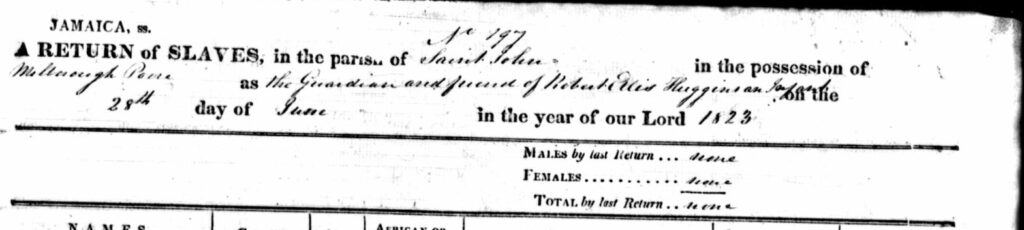
The first time I saw the name was on the 1823 slave return for Robert Ellis Huggins. The document was completed by Milborough Poore, who identified herself as the friend and guardian of Robert Ellis Huggins, described in the record as an “infant.”
Understanding the Term “infant”
Now, this is where understanding historical context really matters. Early in my research, I assumed “infant” meant a baby, maybe one or two years old. I would later learn that during that time period, “infant” could refer to anyone under the age of 21. That completely changed how I interpreted the record.
Slave Return Details
Looking closer at the slave return, it appeared that Robert Ellis Huggins inherited five enslaved individuals. The comment section reads:
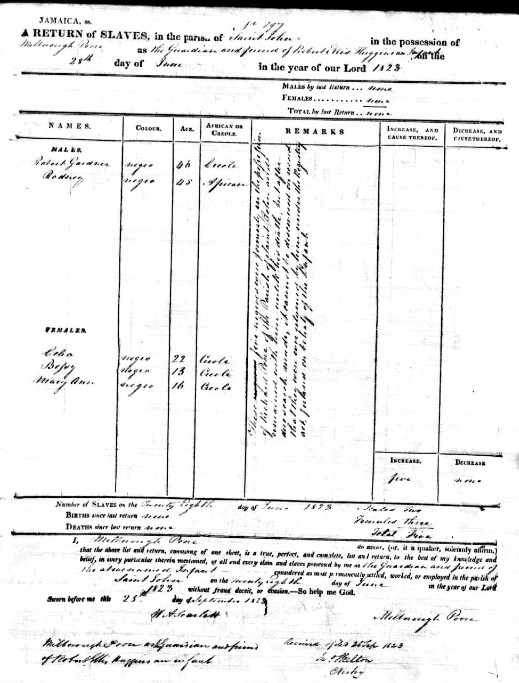
The comment section reads:
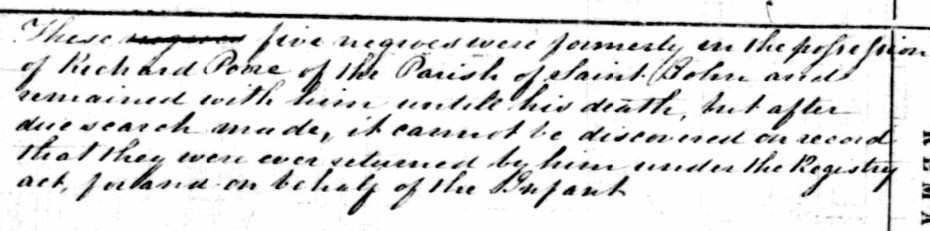
“These five negroes were formerly in the possession of Richard Poore of the Parish of Saint John and remained with him until his death, but after due search made, it cannot be discovered on record that they were ever returned by him under the Registry Act, put in on behalf of the Infant.”
From what I could gather, this statement suggests that these five individuals were being claimed as part of an inheritance for Robert Ellis Huggins. Milborough Poore seemed to be trying to formally register them despite the absence of earlier documentation.
Revisiting the Guardianship
Before receiving the Y-DNA results, I had already been curious about why Mrs. Poore had guardianship of Robert Ellis Huggins. Later, I discovered that Milborough Poore was formerly Milborough Rennalls—the sister of Robert Huggins Sr.’s second wife. Robert Huggins Sr. remarried in 1806 to Ann Vezey Rennalls, and I found church records showing that she died in 1807 from fever. Based on that, I assumed that Mr. Huggins had left his minor son in the care of his sister-in-law.
That explanation made sense—until it didn’t. Remember what I said earlier about assuming?!
With the Y-DNA results in hand, and after revisiting the language in the slave return with fresh eyes, the picture became clearer.
The Shift
We are not Huggins. We are Poores.
And that realization does not just answer a question. It reframes everything I thought I understood about this line. The records were already hinting at the connection. The DNA confirmed it.
Now the question is no longer if the Poore line is ours…
…it is how.